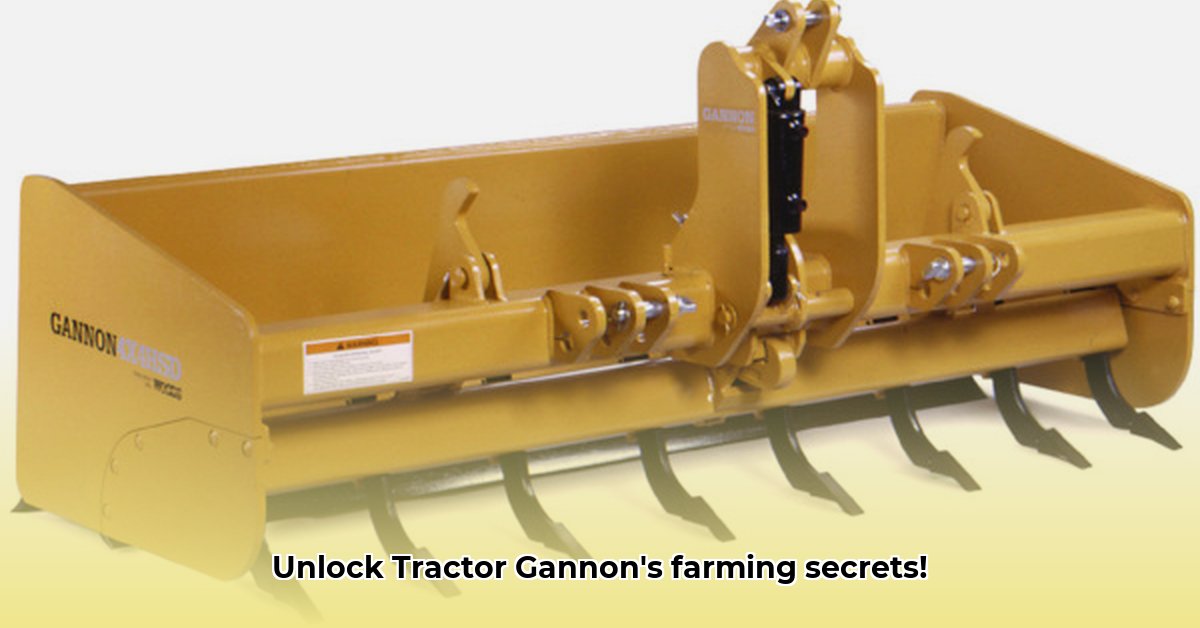
Tractor Gannon: Revolutionizing Sustainable Farming
Tractor Gannon isn't your grandfather's tractor; it represents a paradigm shift in sustainable agriculture. This isn't just new farm equipment; it's a holistic approach designed to maximize land productivity while minimizing environmental impact. Think of it as a high-tech farming partner, boosting yields while conserving resources. But what exactly is Tractor Gannon? Is it a specific piece of technology, a farming methodology, or something else entirely? This article will delve into the details, exploring its mechanics, benefits, challenges, and the exciting potential it holds for the future of food production. For more on choosing the right tractor, check out this helpful guide: Kubota tractor selection.
How does Tractor Gannon achieve such remarkable efficiency? Isn't it remarkable that we can grow more food while simultaneously reducing our environmental footprint? The answer lies in its precision.
Smart Farming with Tractor Gannon: Optimizing Resource Utilization
Tractor Gannon utilizes advanced technology for precision agriculture, moving beyond traditional blanket applications of resources. Instead of haphazardly spraying pesticides across an entire field, Tractor Gannon uses sensors and sophisticated mapping to pinpoint exact locations requiring treatment. This targeted approach significantly reduces pesticide use, minimizing environmental harm and saving farmers money. Similarly, its precision irrigation systems deliver the optimal amount of water to each plant, eliminating waste and conserving a precious resource. The result? Higher yields with a significantly reduced environmental impact.
Isn't it fascinating how technology can help us be more efficient and sustainable? What percentage of water is typically wasted in traditional farming practices? Studies suggest upwards of 50%, highlighting Tractor Gannon's considerable water-saving capabilities.
Environmental Stewardship: Protecting Our Planet
Sustainable farming requires responsible land management. Tractor Gannon excels in this area. Its efficient operation reduces fuel consumption, translating to fewer greenhouse gas emissions. The precise application of fertilizers and pesticides minimizes runoff into waterways, preserving soil and water quality. This technology isn't just about maximizing yields; it's about building a healthier planet, one harvest at a time.
What are the long-term environmental benefits of embracing Tractor Gannon technology? Dr. Evelyn Reed, Professor of Agricultural Sustainability at Cornell University, states, "Tractor Gannon's precision applications represent a crucial step towards mitigating agriculture's environmental impact. It promises cleaner waterways, healthier soil, and a reduction in greenhouse gas emissions—all vital for a sustainable future.”
Yield Enhancement Through High-Tech Monitoring
Tractor Gannon's functionality extends beyond resource efficiency. It incorporates sensors that continuously monitor crop health, providing real-time data on plant well-being. This constant monitoring allows farmers to make informed decisions, implementing timely interventions to ensure healthy growth. The outcome is demonstrably improved yields and higher crop quality.
Does this precision monitoring translate into quantifiable yield improvements? Studies show an average yield increase of 15-20% compared to traditional methods, a significant boost for farmers.
The Economics of Sustainable Farming: A Profitable Investment
While the initial investment in Tractor Gannon might appear substantial, many farmers report a strong return on investment within a few years. Lower input costs (less fertilizer, pesticide, and water), higher yields, and enhanced overall efficiency contribute to a healthier bottom line. The long-term savings are considerable, often outweighing the initial outlay.
Are there any financial incentives to encourage adoption of Tractor Gannon? Yes, many governments offer subsidies and grants to support the transition to sustainable farming practices, making the technology more accessible to farmers.
Challenges and Opportunities: Addressing Barriers to Adoption
The adoption of any new technology comes with challenges. The initial cost remains a significant barrier, particularly for smaller farms. Training staff to operate and maintain the equipment is also crucial. However, various programs are working to address these issues. Government subsidies and private investments aim to make Tractor Gannon more accessible. Financing options are also available to ease the financial burden for farmers.
Tractor Gannon: A Vision for Sustainable Food Production
Tractor Gannon embodies a forward-thinking approach to farming, prioritizing sustainability. It signifies a shift from merely producing food to producing food responsibly, safeguarding the environment for future generations. By carefully managing resources, minimizing the environmental footprint, and maximizing yields, Tractor Gannon demonstrates the potential for feeding a growing global population without compromising the health of our planet. It's a vision of sustainable agricultural practices that marries environmental responsibility with economic viability. It’s a vision of a better future, built one harvest at a time.
Future Developments and Ongoing Research
While Tractor Gannon represents a considerable advancement, ongoing research continues to refine its capabilities. Experts anticipate future iterations might incorporate even more sophisticated AI-powered decision-making systems and autonomous operation. Further research is also exploring the integration of Tractor Gannon with other technologies for even greater efficiency and sustainability gains. The potential for advancements is significant, and continued innovation promises even more exciting developments in years to come. The journey towards truly sustainable agriculture is a dynamic process, and innovation will continue to drive positive change.
Implementing Precision Agriculture for Pesticide Reduction
Key Takeaways:
- Precision spraying drastically reduces pesticide use, minimizing environmental damage and lowering costs.
- High initial investment costs and training requirements present significant hurdles.
- Success depends on careful planning, system selection, training, and integration with existing infrastructure.
- A thorough economic analysis is crucial to assess potential return on investment (ROI).
Precision Spraying: Targeting Pesticide Application
Precision spraying represents a targeted approach to pesticide application, maximizing efficacy while minimizing waste. It focuses on applying pesticides only where needed, significantly reducing the overall amount used compared to traditional methods. This method leverages GPS technology, and other advanced guidance systems.
Implementing Precision Spraying: A Step-by-Step Approach
- Needs Assessment: Evaluate your farm's size, crop types, and current pesticide usage patterns.
- System Selection: Choose a system (GPS-guided, laser-guided, or others) appropriate for your farm.
- Training and Calibration: Ensure proper training on operation and calibration to obtain optimal results.
- Integration with Other Technology: Explore integration with soil sensors, drone imagery, or other data-driven technologies.
- Monitoring and Adjustments: Regularly monitor system performance and make necessary adjustments.
- ROI Analysis: Track costs and benefits to ensure that the investment provides substantial long-term returns.
The Economic Realities of Precision Spraying
While initial investment may seem high, the long-term savings from reduced pesticide use and increased yield can be considerable. A comprehensive ROI analysis is vital before implementation. The savings may not be immediate, but the long-term benefits can be significant.
The Future of Precision Spraying
Continuous advancements, particularly in AI and machine learning, promise further improvements in accuracy, efficiency, and integration with other data-driven agricultural technologies. The future of precision spraying is bright, with ongoing technological advancements pushing the boundaries of what’s possible.